
Don't just track.
React.
Neurocognitive analytics for high-performance sport. Concentration, mental fatigue and stress — read while the session is still running.
Cognitive layer
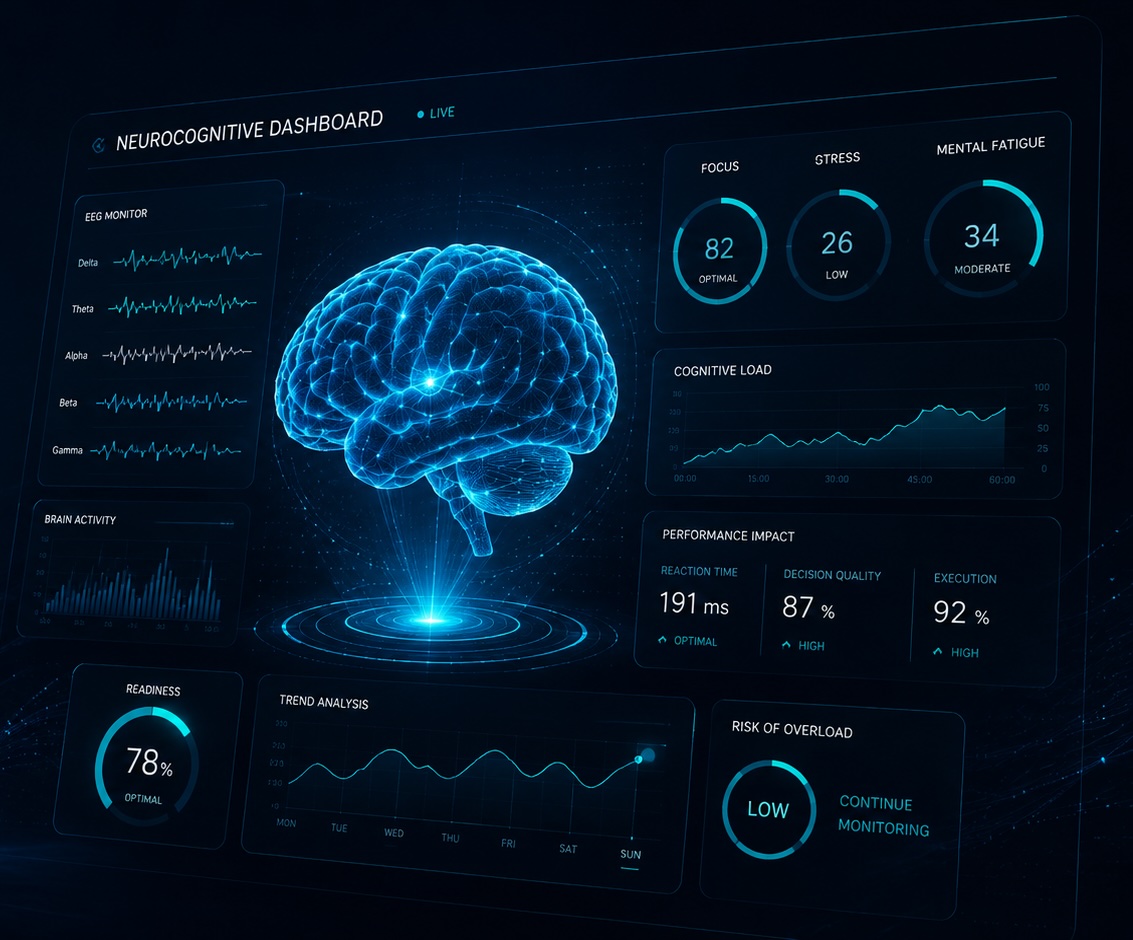
Read it while there is still something to do with it.
Data after the session explains what happened. A reading during it changes what happens next.
From a complex signal to a simple reading.
Their normal state, recorded first.
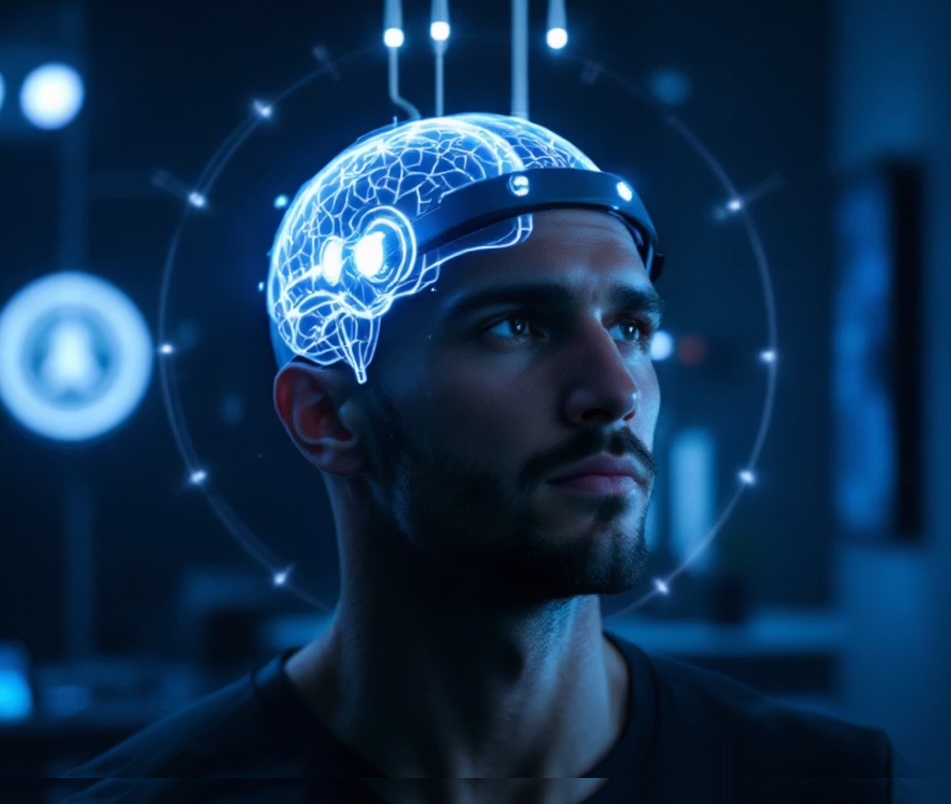
Non-invasive EEG during practice.
Today against their own pattern.
One clear reading per session.
Focus and attention across the session.
Early warning of mental wear against the load.
Response to pressure and critical moments.
It does not replace the coach's read. It adds a layer of objective evidence.
One status per athlete, without stopping practice.
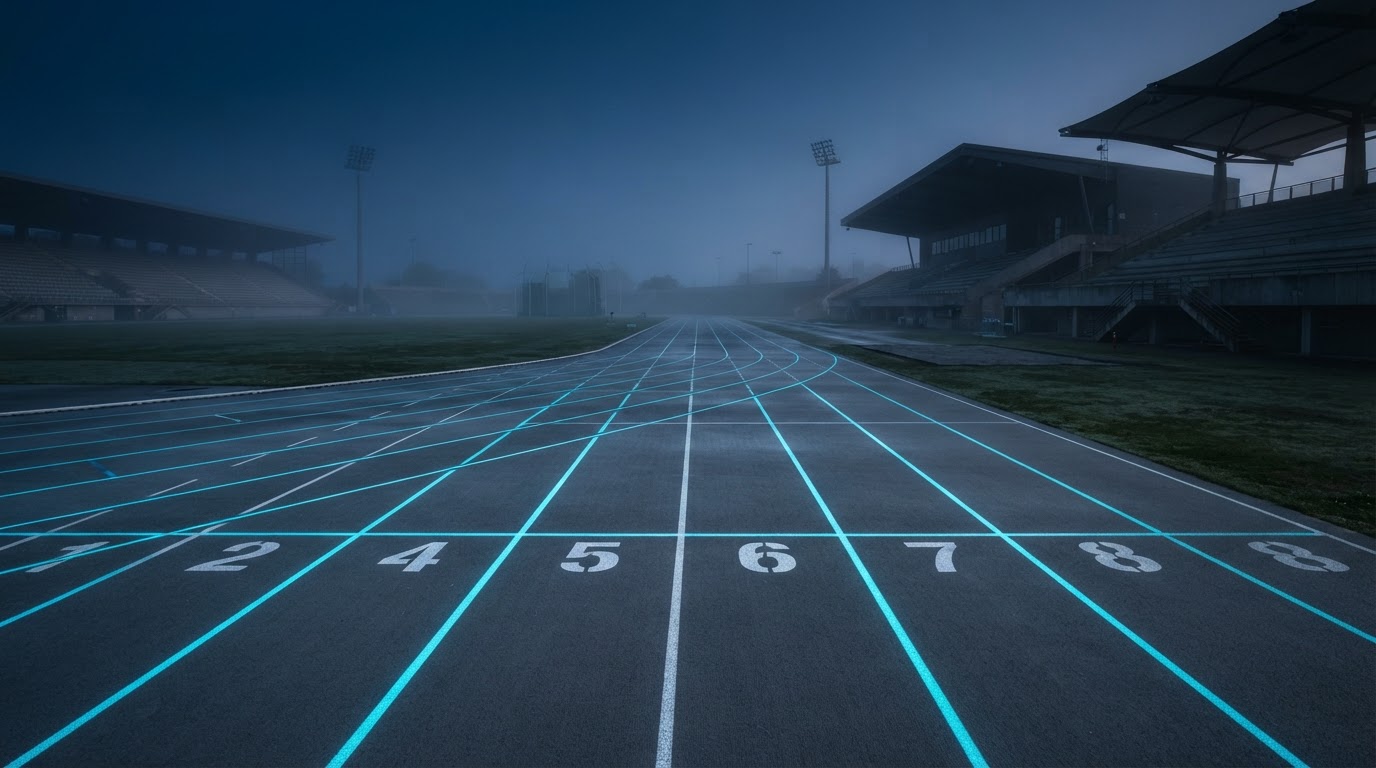
A traffic light across the three indicators.
Measured against that athlete’s normal, not the squad’s.
A sustained drop in concentration, flagged in the final stretch.
The same signal, read three ways.
You knew how you felt. Now you know how you responded.
A summary after each session, and what to prioritise in recovery.
What you buy is not equipment. It is criteria.
One reading for the whole squad, whoever runs the session.
Every session adds to a history that exists nowhere today.
And it stays with the institution — it does not leave with the technical staff.
Helmet sports, in training.
If the sport already uses a helmet, integration asks nothing new of the athlete. We start in practice, where load decisions are actually made.
A small group that comes in before the rest.
Thirty minutes is enough. Mariana Poisson takes these conversations directly.